
Road Safety in Ceredigion
Ceredigion County Council is committed to making travel safer for everyone who uses the county’s roads and paths, including pedestrians, cyclists, motorcyclists, horse riders, drivers and passengers of all ages. This page provides practical safety advice and information about the education, campaigns, training courses and local initiatives delivered by the Council’s Road Safety Section to help people travel safely and confidently throughout Ceredigion.
Road Safety Training in Ceredigion
The following are some of the training initiatives and schemes that Ceredigion County Council organises mostly funded by the Welsh Government.
Biker Down! Cymru
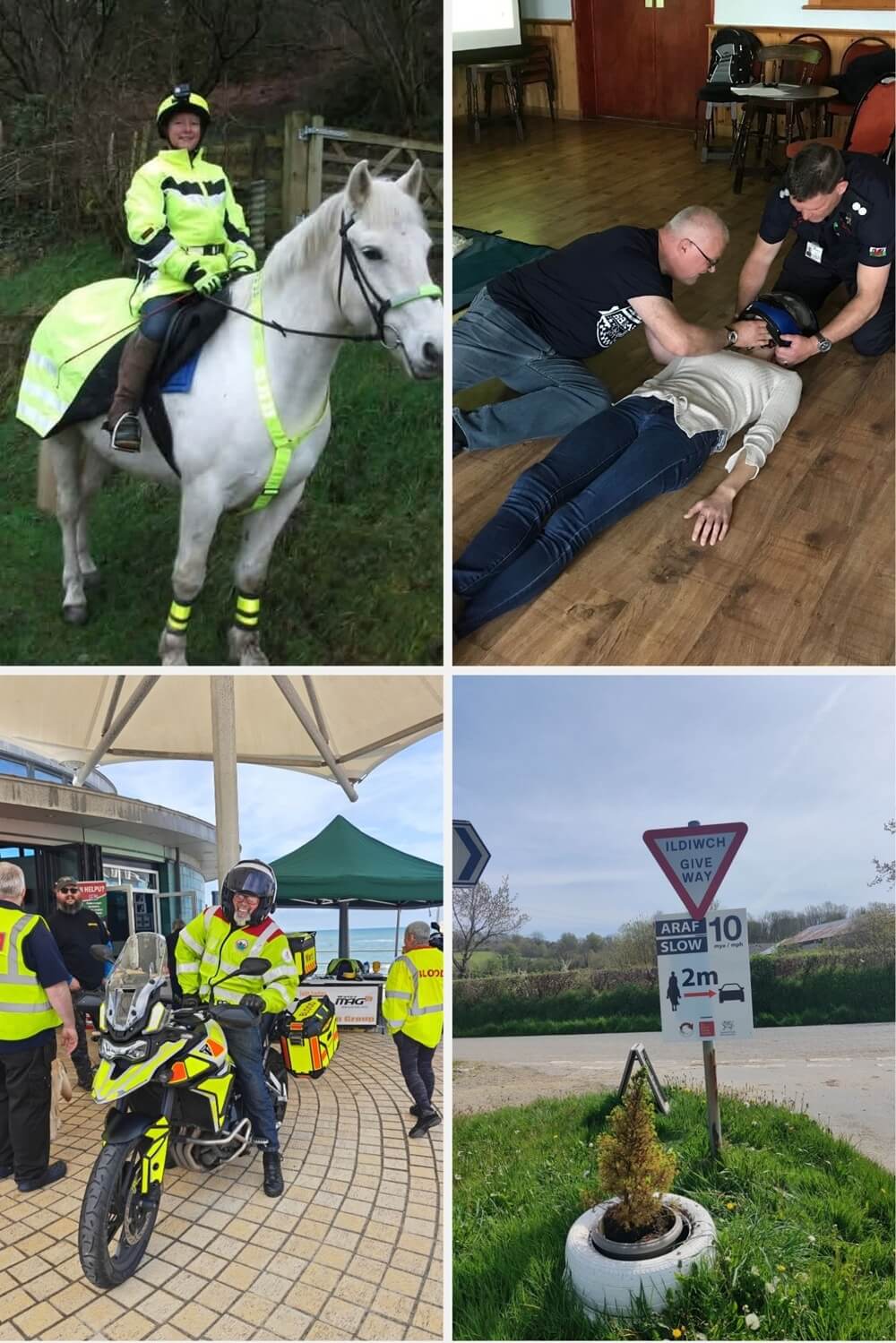
As bikers tend to ride in groups or pairs, it is usually the case that when one is involved in an accident the first person on the scene will be a fellow biker. Biker Down Cymru! aims to reduce the number of motorcyclists killed and seriously injured in road accidents and is delivered by Operational Firefighters/the Fire Bike Team from Mid and West Wales Fire and Rescue Service.
The course comprises of three modules:
- Managing a collision scene
- First aid
- The science of being seen
The course will give participants a better understanding of what to do if they come across a road traffic collision and how to manage it safely. This course although biker themed is suitable for all road users.
How much does the course cost?
Thanks to Road Safety Grant funding from Welsh Government the course is free of charge. On completion of the course the participants will get a free first aid kit. To find out about future dates or to book a space please contact the Ceredigion Road Safety team via clic@ceredigion.gov.uk or by calling 01545 570881.
Ceredigion Enhanced Rider Scheme
Just passed your motorcycle test? Check your riding standards? Returning to riding after a break? Upgrading to a more powerful motorcycle?
CERS is a free motorcycle rider training scheme subsidised by the Welsh Government, aimed at further developing a rider’s skills.
The theory/practical course is one day in duration and run from April-September.
Our instructors are DVSA approved under the Enhanced Rider Scheme.
Participants will be issued with a DVSA certificate of competence recognised by a wide variety of insurance companies and may attract a premium discount.
For more information or to book your place please call 01545 570881 or email clic@ceredigion.gov.uk.
Ride Free: Post-CBT Rider Training
More people are choosing to complete Compulsory Basic Training (CBT) so that they can ride a moped or motorcycle of up to 125cc for essential journeys, including travelling to work, school or college. As CBT is completed in one day, Ceredigion County Council is now offering additional post-CBT training to provide riders with more detailed safety information and practical riding experience.
We recognise that motorcycling is one of the most vulnerable forms of transport, and this training is designed to help riders develop new skills, improve their awareness and feel more confident on the road.
The course is free to anyone riding a moped or motorcycle of up to 125cc with a valid CBT certificate. To enquire or register your interest, email clic@ceredigion.gov.uk or call 01545 570881.
This is a new initiative which is currently funded by the Dyfed Powys Police and Crime Commissioner.
Pass Plus Cymru
Passed your driving test? Aged 17-25? Live in Ceredigion?
Discover more driving techniques, hints and tips for just £20…and there’s no test!
You will focus on:
- Heading off on the motorway
- Driving techniques and hazard awareness
- Getting around at night
- Coping with busy towns and cities
- Driving on rural country roads
- Thinking ahead – just like you’re doing now
What do you get from it?
- Better driving skills
- More chance of lower insurance
- Less chance of a collision or injuring yourself, friends and others
Pass Plus Cymru is a course made up of two parts. The first part is class based where you attend an evening presentation of approx. two hours, on attending this session you will then be contacted by an Approved Driving Instructor who will arrange a 6 hour practical driving lesson from your own vehicle. The Welsh Government covers the majority of the costs, you just contribute £20 which is paid directly to the ADI. To enquire about a course or register an interest in attending please contact the Road Safety team via Clic@ceredigion.gov.uk or by calling 01545 570881.
Driver Simulator - New in 2027
The Driver Simulator helps the Road Safety team explain typical driving dangers, scenarios and essential skills in a way that will interest its target audience.
Learner and qualified drivers will be able to experience the dangers of attempting to text whilst driving as well as see how drink and drug driving goggles can seriously impede your ability to drive safety in a controlled environment.
This Driver Training simulator will be used at local events and a hired one has already been extremely successful for engagement at Rali Ceredigion for the past two years.
The Road Safety team will also offer to bring the simulator to secondary schools and colleges in the county to provide an interactive road safety input to pupils from 2027 onwards.
Young Drivers Rural Roads Research project 2027
New for 2027 will be a research project involving learner drivers in Ceredigion, with the aim to develop a new young driver initiative as a result of this research.
More information to follow on this project which is funded by the Dyfed Powys Police and Crime Commissioner.
Over 65 and interested in enhancing your current driving skills and knowledge?
This Mature Driver Course provides useful information on keeping you driving safer for longer, maintaining mobility and boosting your confidence.
An informal morning benefiting from the expertise of Road Safety professionals held at various locations across Ceredigion throughout the year.
This course is in two parts, with you initially being invited to attend a morning/ afternoon interactive class-based talk for 3 hours.
Once you have attended this there is a 45-minute practical driving element to the training with an Approved Driving Instructor. This can be in your own vehicle if preferred. This course is totally free of charge as it is funded by the Welsh Government.
In order to register an interest please contact the road safety team via Clic@ceredigion.gov.uk or via 01545 570881.
Road Safety is a skill that is essential at any age, but children can be particularly vulnerable on our roads. Road Safety is often taught in Schools, and can also be taught by parents at home, through providing a good example when you travel with your children. This page details the Road Safety schemes and initiatives that are currently running in Ceredigion, as well as providing advice for parents who which to teach good Road Safety practices to their children, and links to external sites with more information and advice.
Kerbcraft/ Child Pedestrian training
The Welsh Government is funding the Welsh Child Pedestrian training using the Kerbcraft scheme in partnership with local Welsh Authorities. Kerbcraft is a scheme designed to teach three pedestrian skills to 5-7 year old children. Training is progressive over 6 weeks, and each phase building on the foundation laid by earlier phases. Children are taught by means of practical training out on the side of the road rather than lessons in the classroom.
The three stages of the training involve:
- Finding safe places to cross
- Crossing at junctions
- Crossing between parked cars
This scheme is best delivered by parent volunteers, therefore if you would like to enquire about setting up this training in your local primary school, please get in touch with Kayleigh Tonkins via Clic@ceredigion.gov.uk or by calling 01545 570881DBS checks will be required prior to commencement.
National Standards Cycle training / Bikeability
Cycle Training is a useful way for both children, and adults who haven't cycled for a while, to increase their understanding of cycling and cycle safety.
National Standards Cycling Training is a two/three-level scheme designed to help people cycle safely and confidently on the road while showing consideration for other road users.
Level 1: Conducted in a controlled environment away from roads and traffic. It covers basic cycling skills, including starting and stopping, manoeuvring, signalling and using gears.
Level 2: On-road training for people who have completed Level 1 and are ready to progress. It provides practical experience and helps trainees deal safely with traffic on short commuting or leisure journeys.
Level 3: Develops riders’ skills so they can make journeys competently, confidently and consistently in varied traffic conditions. It covers hazards, on-the-move risk assessment and planning safer routes.
The National standards cycle training aims:
- Reduce the number of child cyclists injured in Ceredigion
- Raise awareness of the importance of cycle training and education
- Develop observation and manoeuvring skills
- Encourage the use of appropriate protective clothing and helmets
- Prepare younger riders for on-road training
- Help parents understand the importance of cycle training
Training is conducted on quiet local roads, in close proximity to the school, where simple manoeuvres such as left and right turns, overtaking a parked car etc., can be carried out. To be eligible for training all pupils should have reached the age of 10 (year 5).
Pupils progress will be constantly monitored during regular lessons, and upon completion of the course the young riders will be awarded with a Certificate to show they have participated in the training.
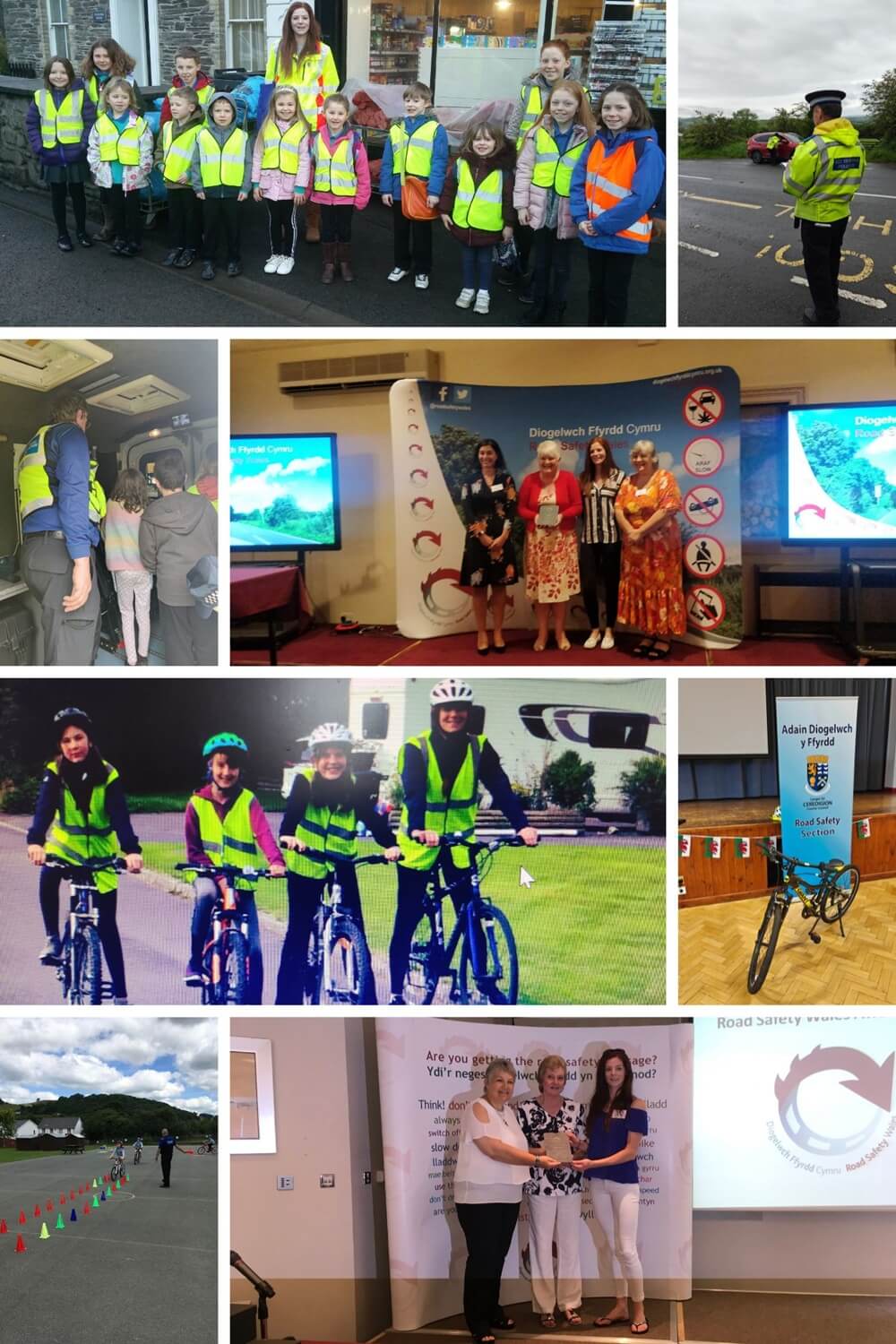
Ceredigion Road Safety department has a team of three road safety trainers that attend every school in Ceredigion each year to deliver National Standards cycle training level 1 & 2.
There is an opportunity for Ceredigion residents to receive NSCT Level 3 training. To enquire about this contact clic@ceredigion.gov.uk or call 01545 570881.
Child Car Seat Safety
Using the correct child car seat is one of the most important ways to protect children when travelling in a vehicle. Parents and carers should ensure that child car seats are appropriate for their child’s age, height and weight, and are fitted and used correctly on every journey.
Child Car Seats: Advice and Support
In the UK, children must normally use a suitable child car seat until they are either 12 years old or 135cm tall, whichever comes first. Choosing the correct seat and ensuring it is fitted properly can significantly reduce the risk of injury in the event of a collision.
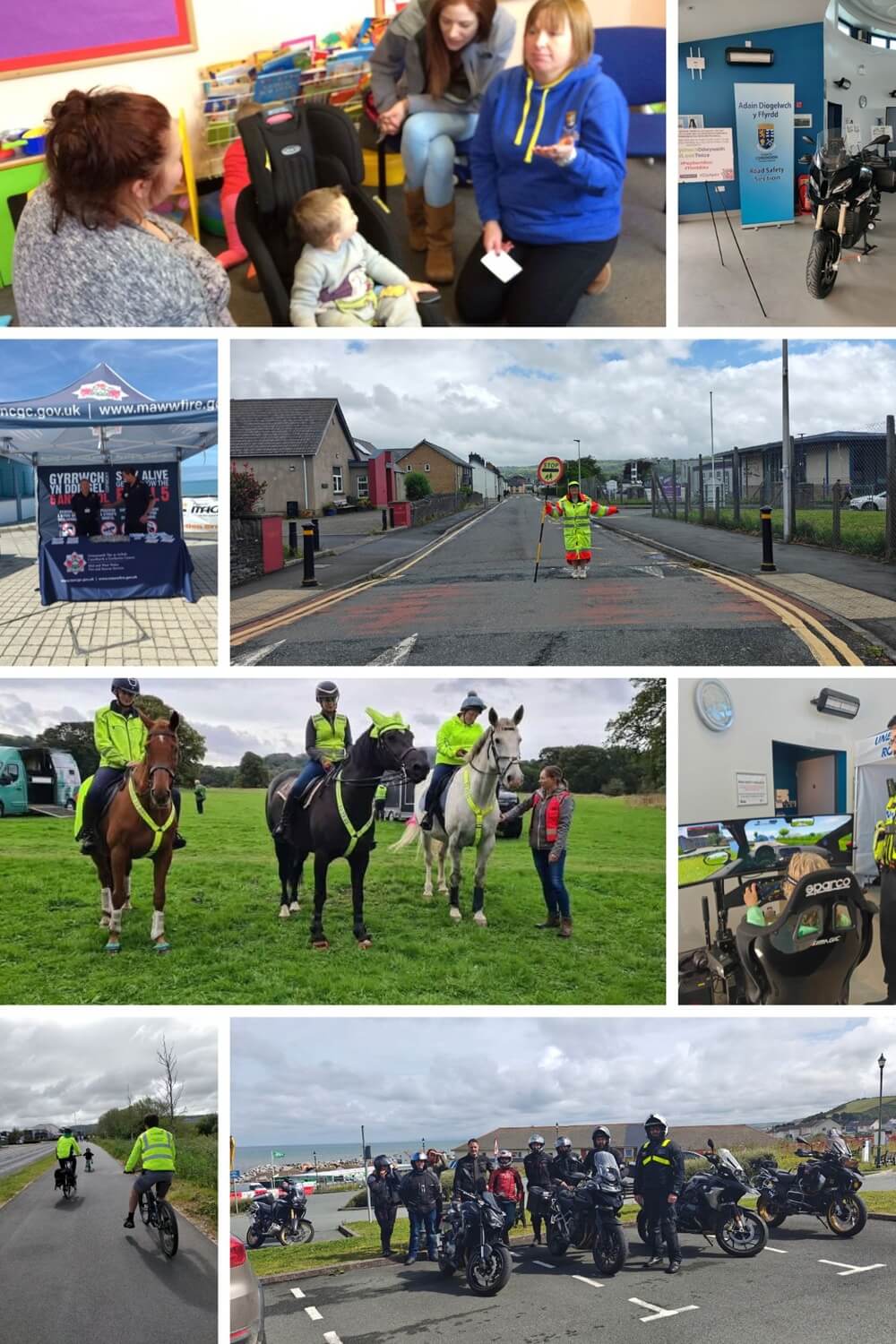
Ceredigion County Council's Road Safety Team offers free child car seat checks at community venues and events across the county, as well as individual appointments for parents and carers who have concerns or would like advice about fitting or using a child car seat. The team can check that seats are installed correctly, provide guidance on legal requirements, and answer any questions relating to child passenger safety.
For more information about child car seat checks, upcoming events, or to arrange an appointment, please contact the Road Safety Team via clic@ceredigion.gov.uk or by calling 01545 570881.
School Crossing Patrols
School Crossing Patrols play a vital role in helping children and families travel safely to and from school. In Ceredigion, the School Crossing Patrol Service is managed and funded through the Road Safety Department, with patrols positioned at approved crossing sites where there is an identified need to assist pedestrians in crossing the road safely. School Crossing Patrol Officers are trained to stop traffic using the recognised "STOP" sign and provide a safe crossing point for pupils and other pedestrians during school arrival and departure times. The service forms an important part of the Council's wider commitment to improving road safety, encouraging active travel and protecting vulnerable road users. The Road Safety Team works closely with schools, local communities and other partners to review crossing locations and ensure that patrols continue to support the safety and wellbeing of children throughout the county.
Drivers can increase their safety on Ceredigion's roads by following a number of simple steps:
- Drive at a safe and appropriate speed. Keep within the speed limit and reduce your speed when road, traffic or weather conditions require extra care
- Keep your vehicle roadworthy. Check the tyres, brakes, lights and fluid levels regularly, and arrange servicing when required
- Never drive under the influence of alcohol or drugs. Check whether prescribed or over-the-counter medicines may affect your ability to drive
- Do not use a hand-held mobile phone or similar device while driving. This includes when you are stationary in traffic. Stop in a safe place and switch off the engine before using your device, except in the limited circumstances permitted by law
- Make sure everyone in the vehicle is wearing a seat belt or using the correct child restraint
- Take extra care in severe weather, including rain, snow and ice
- Look out for people who are more vulnerable on the road, including pedestrians, cyclists, motorcyclists and horse riders
By following this advice, drivers can help keep our roads safe.
Walking and Cycling are two of the healthiest ways to get around Ceredigion, whether travelling to work, school, the shops, or just to get out and about. However, pedestrians and cyclists are vulnerable on the roads. This page gives advice and information on how to remain safe.
Pedestrian safety
There are a number of simple steps that Pedestrians can take to remain safe on Ceredigion's roads:
- Wear bright or reflective clothing, particularly in poor visibility or at night
- Use the pavement where possible. Where there is no pavement, follow the Highway Code guidance for walking on the road
- Choose a safe place to cross, stop, look and listen, and keep your attention on traffic
- Use pedestrian crossings where available and avoid crossing between parked vehicles
- Follow the Green Cross Code and the Highway Code
Safety for cyclists
There are a number of ways in which Cyclists can improve their safety on Ceredigion's roads. Rules 59-82 of the Highway Code give a number of ways that Cyclists can, and in some cases, must, take actions to improve both their safety, and the safety of other road users. These include, but are not limited to:
- Use a white front light and red rear light at night
- Fit a red rear reflector and amber pedal reflectors
- Do not cycle on the pavement unless it is a designated shared-use route
- Take particular care when turning, using bus lanes and passing or riding near traffic
- Keep both hands on the handlebars except when signalling or changing gear
- Wear a correctly fitted helmet and bright or reflective clothing, and avoid loose clothing that could become caught in the bicycle
Bike Maintenance
Proper bike maintenance is also an integral part of cycling safety. Before setting off, please check that:
- Your saddle is at the correct height. When stopped, you should be able to comfortably stand above the frame with both feet on the ground
- Your brakes are fully functioning, and the cable isn't frayed
- Both tyres are fully-inflated, and puncture-free
- Your chain has not slipped, and does not catch when you move the pedals. Your chain should be kept well-oiled and free from rust
If you are concerned about performing maintenance on your bike, visit your local bike shop for advice.
For more information, please see The Highway Code's Rules for Cyclists.
Horse riders are among the road users most at risk from road traffic. Riders, drivers and other road users all have a responsibility to behave considerately and reduce danger. The following advice reflects Rules 49–55 and other relevant guidance in the Highway Code.
Before riding on the road
- Make sure you can control your horse and that your tack is secure and in good condition. Never ride on the road without both a saddle and bridle
- If you or your horse are inexperienced in traffic, ride with a calm, experienced horse and rider. Consider suitable road-safety training, such as the British Horse Society Ride Safe Award
- Plan your route carefully. Avoid busy roads, poor visibility and difficult junctions where a safer alternative is available
- Tell someone your planned route and expected return time, particularly when riding alone
Clothing and equipment
- Children under 14 must wear a securely fastened riding helmet that complies with the legal requirements. Other riders should also wear a correctly fitted, securely fastened helmet
- Wear boots or shoes with hard soles and heels, and light-coloured or fluorescent clothing in daylight
- Use reflective clothing for both rider and horse when visibility is poor. Reflective bands and a fluorescent or reflective tail guard can help other road users see you earlier
Riding safely
- Keep to the left, remain alert and ride in single file on narrow or busy roads and when approaching bends
- Never ride more than two abreast. Riding two abreast may be safer when accompanying a young or inexperienced horse or rider, but return to single file when it is safe to do so
- Look behind before moving off, changing direction or turning, and give a clear arm signal. Keep both hands on the reins unless you are signalling
- Do not ride on a footpath or pavement. Use a bridleway where one is available and suitable
- Take particular care at junctions, roundabouts and railway crossings. If necessary, dismount and lead your horse, keeping the reins under control
- Do not use a mobile phone or wear headphones while riding on the road, as these can reduce your awareness
Riding at night or in poor visibility
It is safer not to ride on the road at night or in poor visibility. If this cannot be avoided
- wear reflective clothing
- Fit reflective bands above the horse’s fetlock joints
- A light showing white to the front and red to the rear should be attached to the rider’s right arm, leg or riding boot.
When leading a horse at night, carry a light in your right hand showing white to the front and red to the rear, and use reflective clothing and equipment for both you and the horse.
Advice for drivers passing horses
Drivers should pass horse riders and horse-drawn vehicles at speeds under 10 mph and allow at least 2 metres of space where possible. Pass slowly and quietly, avoid sounding the horn or revving the engine, and be prepared to stop. Do not accelerate sharply after passing, because a horse may react to sudden noise or movement.
For full, current guidance, see The Highway Code: Rules about animals (Rules 47–58).
Ceredigion’s Road Safety Team
Ceredigion’s Road Safety Team provides a wide range of road safety courses and also attends local events, schools and colleges to share advice and promote safer travel.
The initiatives listed above are not exhaustive, and the team works closely with Dyfed-Powys Police, GoSafe, Mid and West Wales Fire and Rescue Service, neighbouring local authorities and Road Safety Wales to support road safety across the county and beyond.
Kayleigh Tonkins, Road Safety Officer for Ceredigion County Council, has also served as Vice Chair of Road Safety Wales since November 2024 and is passionate about improving road safety for all road users.